
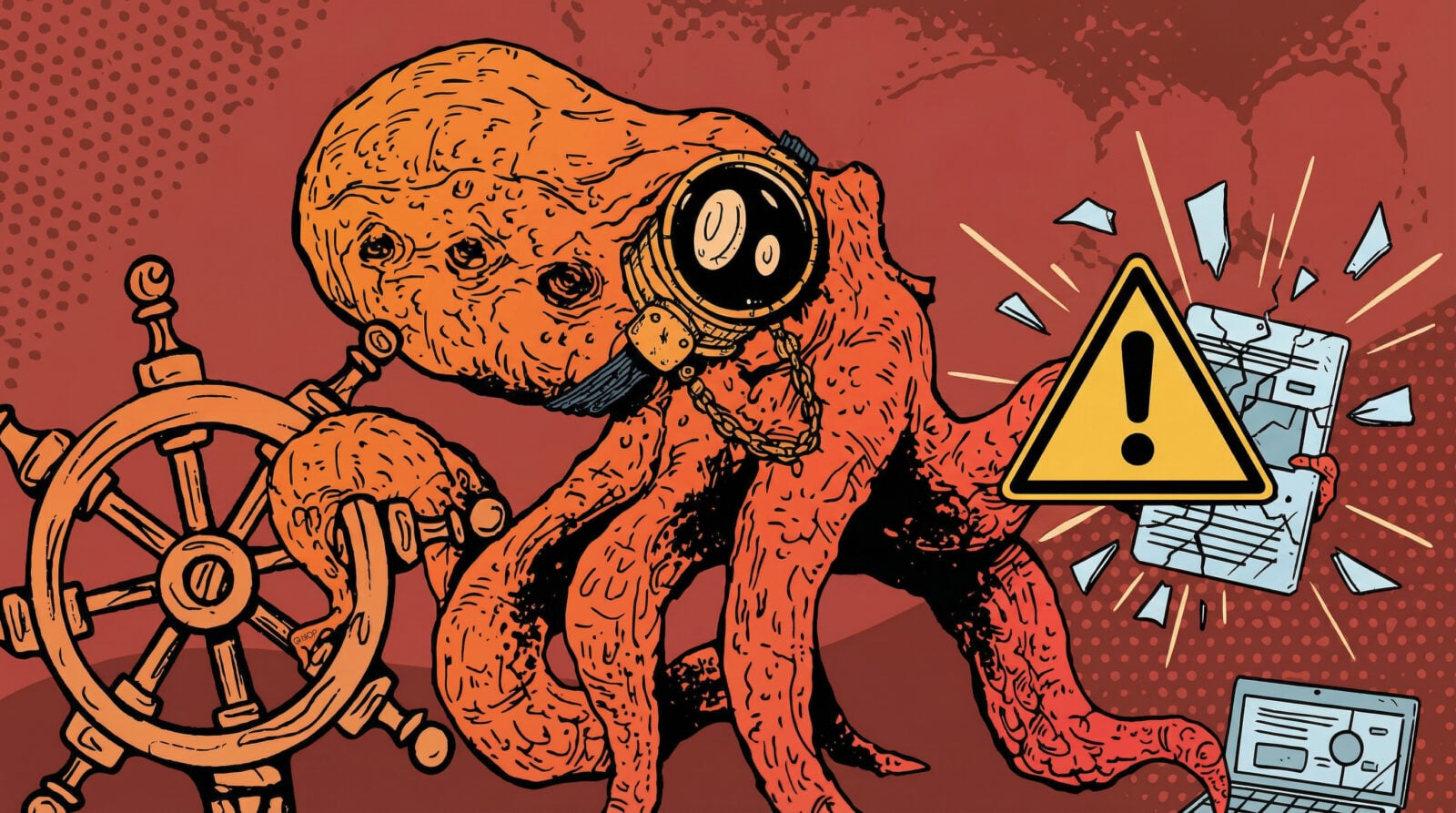

AI won’t replace your marketing team, but marketing teams with AI will absolutely outpace the ones pretending it’s still 2019. That’s the beauty of human-in-the-loop AI marketing.
More than half of small businesses are already using generative AI in some form, whether they admit it out loud or quietly whisper prompts into a chatbot at 11:47 p.m. Teams that use AI well move faster, test more, and get more done with fewer people.
But here’s the uncomfortable truth no one wants to say on LinkedIn: throwing prompts at AI is not a marketing strategy, it’s improvisation. Sometimes it works, but often it creates messes. Occasionally, it creates regulatory nightmares.
AI isn’t going anywhere, so let’s talk about how not to look like a jerk when you use it. And more importantly, how not to put your brand, reputation, or compliance at risk.
Why ‘Just Ask a Chatbot’ Isn’t a Workflow
Right now, most businesses are using AI the same way people used spellcheck when it first came out: casually, inconsistently, and without any real rules. Here’s how it usually goes:
- Someone asks AI to write an email.
- Someone else asks it to write social posts.
- Another person uses it for ad copy.
The result?
- No one knows what prompts were used.
- No one knows what rules were followed.
- Everyone assumes someone else reviewed it.
Without structure, AI introduces risk fast: off-brand messaging, misleading claims, accidental policy violations, and content that sounds impressive but says absolutely nothing. Regulators are already penalizing companies for AI washing — making exaggerated or deceptive claims about AI capabilities — and that pressure is only increasing.
The businesses that win with AI won’t be the loudest; they’ll be the most organized.
What ‘Human-in-the-Loop AI Marketing’ Actually Means
The term “Human-in-the-loop AI marketing” gets thrown around a lot, but here’s exactly what it means:
- Humans design the system.
- AI assists inside it.
- Humans approve what goes out.
In a system such as this, three principles are key:
- AI does not decide strategy.
- AI does not decide tone.
- AI does not decide what’s accurate, compliant, or appropriate.
Think of AI less like a brain and more like a high-speed production engine that only works well when the tracks are clearly laid.
Side note: We’ve all seen what happens in movies when humanity relies on robots too much.
The Real Risks of AI in Marketing (And Why They Matter)
Marketing leaders are facing real exposure from sloppy AI use.
First up are misleading claims. AI can confidently invent stats, exaggerate features, or imply capabilities your product doesn’t actually have. That’s how brands end up explaining themselves to regulators rather than to customers.
The scary thing is that AI is not culpable for what it says. You are.
Data misuse is another landmine. Feeding sensitive customer data into AI tools without guardrails can violate privacy expectations — or worse, laws — depending on your industry.
Then there’s bias and tone. AI doesn’t understand context the way humans do. It can unintentionally exclude, offend, or oversimplify, especially when talking to diverse audiences.
And finally, there’s brand drift. When AI writes everything, your brand voice slowly dissolves into generic marketing soup. Customers might not complain, but they stop paying attention.
None of these risks means “don’t use AI”; they mean use it intentionally.
Why Structured AI Workflows Are Worth the Effort
When AI is embedded into clear workflows instead of used randomly, three things happen at once:
- Speed increases because teams aren’t reinventing the wheel every time.
- Consistency improves because brand rules are baked in.
- Compliance becomes manageable because approvals are documented.
That’s the difference between AI as a liability and AI as an asset, and that’s where systems matter more than tools.
The Five Core Layers of a Responsible AI Marketing System
At Kraken Sales Funnels, we don’t start with prompts. We start with architecture. Every AI-powered marketing system we design has five distinct layers, each with a clear role.
1. The Strategy Layer (Humans Only)
This layer answers the questions AI should never be guessing at:
- Who is this for?
- What’s the goal?
- What action should someone take?
- What tone fits the moment?
Humans define the audience, the offer, the positioning, and the guardrails. AI never invents those but operates inside them.
2. The Library Layer
This is where swinging wildly in the dark gets replaced by consistency.
Instead of everyone working in a different AI ecosystem with varying degrees of brand knowledge, we create business blueprints with brand voice, KSPs, goals, industry insights, target audience profiles, competitor information, and more. This keeps all the content we create on the same page.
3. The Drafting Layer
Now AI does what it does best: generating options quickly. Some applications include:
- Subject lines
- Email bodies
- Blog outlines
- Social snippets
AI accelerates creation, but it does not publish anything on its own.
4. The Review & Approval Layer
This is where humans step back in:
- Someone checks for accuracy.
- Someone checks for tone.
- Someone checks for compliance.
- Someone adds in humanity and expertise.
- Someone decides if it’s actually good.
Our approvals aren’t bureaucratic, they’re protective. This layer is what keeps brands out of trouble while still moving fast.
5. The Automation & Delivery Layer
Even when automations are implemented, humans are giving the final checks. Many processes are still done by hand. AI helps power delivery, but humans remain an integral part of the workflow.
What This Looks Like in Real Marketing Workflows
Let’s make this concrete:
AI-Assisted Email Marketing (Done Right)
AI generates subject line variations, draft bodies, and A/B test ideas based on goals humans defined ahead of time. A marketer reviews the copy, tweaks language, removes fluff, and approves the final version. Sometimes they do extensive rewrites based on their expert judgement. Then the emails hit our CRM workflows only after passing intense human review.
The result: faster campaigns, better content, fewer “why did we send that?” moments.
AI-Assisted Content Engines
AI helps outline blog posts, generate first drafts, and repurpose long-form content into social snippets and email teasers. Humans refine the core article, ensure it reflects real expertise, rewrite entire sections as needed, and make the article interesting to read.
The result: more content without sounding like a content farm.
AI-Assisted CRM Automations
AI can help score leads, suggest follow-ups, and draft reminder messages, but humans set the rules. Who gets contacted, when, and how often is intentional, documented, and adjustable.
The result: human-in-the-loop AI marketing automation that feels helpful, not creepy.
Where Governance Fits (Without Killing Momentum)
Governance doesn’t have to mean red tape. In innovative AI marketing systems, governance is lightweight but clear:
- A short AI usage policy
- Brand libraries
- Defined approval roles
- Periodic reviews to make sure nothing drifted
It’s all about ensuring the system stays aligned as tools evolve.
Measuring Whether AI Is Actually Helping
If AI is doing its job, you should see it in the numbers and the clock:
- Brand awareness expands because content is more abundant.
- Open rates improve because messaging is sharper.
- Conversion rates increase because content is more consistent.
- Time saved goes up because teams stop starting from scratch.
The Most Common Mistakes We See
Most AI marketing failures can come from a lot of sources, like the lack of a central knowledge base, poor communication, unchecked AI usage, and skipped approvals.
When AI is allowed to run wild, brands lose control fast. When teams don’t communicate how AI is being used, inconsistency creeps in. And when approvals disappear “just this once,” mistakes reach customers.
None of these problems are hard to fix once you admit they’re happening.
How Kraken Designs AI Marketing Workflows
Kraken Sales Funnels doesn’t bolt AI onto broken processes. We create workflows where AI fits naturally, safely, and profitably.
We design brand libraries, approval steps, CRM automations, and reporting systems that protect the brand while increasing speed. AI works quietly in the background. Humans stay visible, intentional, and in control.
That’s the difference between AI as a novelty and AI as infrastructure.
A Quick Gut-Check for Your Business
If you’re honest, you probably know which category you’re in already:
- Is your AI use documented or tribal knowledge?
- Are prompts standardized or improvised?
- Does someone always review everything…or “usually”?
- Can you explain your AI process to a regulator — or a customer — without sweating?
If those questions make you uncomfortable, that’s not a failure. It’s a signal.
The Brands That Win Will Use AI With Intention
AI isn’t going away, but neither are regulations or customer skepticism.
The brands that win won’t be the ones shouting loudest about AI. They’ll be the ones quietly using it more effectively within human-in-the-loop AI marketing workflows.
If you want help auditing your current AI usage, tightening your workflows, and building systems that move faster without creating risk, Kraken Sales Funnels is ready to help.
Schedule a responsible AI workflow audit, and let’s make sure AI works for your business, not against it.

