
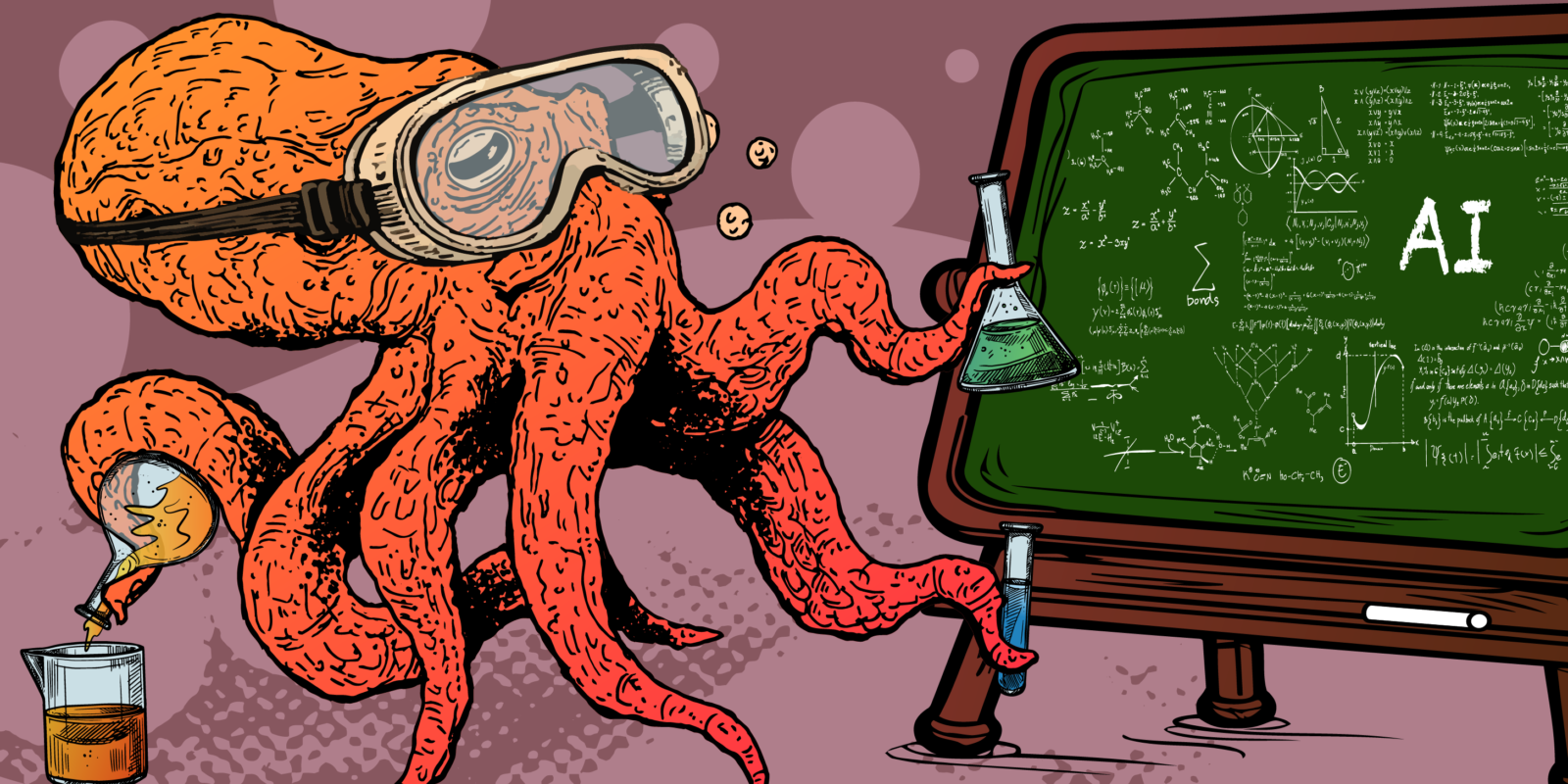

Let’s start with a hard truth: AI is powerful, but it’s not your marketing strategy.
It feels like it could be. It writes your blogs, drafts your emails, generates your ads, and fills your content calendar faster than your team ever could on their own. It gives you momentum, removing bottlenecks and making you feel super productive.
And yet…
A lot of businesses leaning heavily into AI are running into the same frustrating outcome:
- More content, less traction
- More activity, fewer results
That’s because they’re skipping something critical: They’re using AI without a system.
Understanding AI marketing strategy best practices isn’t about using more tools. It’s about using them correctly. That’s because AI doesn’t replace strategy. It executes an intentionally, insightfully designed strategy.
AI Is Not the Strategy; It’s the Assistant
One of the most important AI marketing strategy best practices is this: AI is the assistant, not the decision-maker.
AI is incredibly effective at taking direction and producing output, but it can’t decide:
- What your brand should stand for
- What message will resonate most with your audience
- What angle will differentiate you from competitors
Those decisions require context, experience, and judgment.
When businesses treat AI like the strategist instead of the assistant, they end up with disconnected campaigns, generic (boring) messaging, and content that feels busy but not impactful.
It’s like having a world-class production team with no creative direction. You’ll get volume, but not clarity.
Real-world example: Air Canada chatbot failure
In 2024, Air Canada was required to honor a refund after its AI chatbot provided a customer with incorrect policy information. The chatbot confidently gave an answer that wasn’t accurate, and the company was held accountable.
This situation highlights a core principle behind AI marketing strategy best practices: AI doesn’t understand consequences. Humans do.
Without human oversight, AI doesn’t just make mistakes. It makes confident mistakes that your brand has to own and recover from.
Where AI Wins (Drafting, Summarizing, Scaling)
To apply AI marketing strategy best practices, you need to understand where AI actually excels. When you use it in the right areas, it’s a massive advantage.
- Drafting content quickly: AI can generate first drafts of blogs, emails, landing pages, and ads in seconds.
- Summarizing large amounts of information: Reports, meetings, and research can be condensed into usable insights instantly.
- Scaling content production: One idea can be turned into multiple formats across channels with minimal effort.
This is where AI shines: speed and efficiency. It removes friction from execution and allows your team to focus on higher-level decisions.
Real-world example: Shopify’s AI-first mindset
In 2024, Shopify’s CEO encouraged employees to adopt AI as a core part of their workflow, emphasizing that teams should use AI tools to increase productivity and move faster.
But here’s the key detail that aligns with strong AI marketing strategy best practices: They didn’t remove humans from the process. They empowered them. Rather than replacing thinking, AI accelerated execution.
Where Humans Win (Judgment, Voice, Trust)
If AI is the engine, humans are the steering wheel, and no list of AI marketing strategy best practices is complete without this distinction. There are three areas where humans consistently outperform AI:
- Judgment: AI predicts what’s likely; it doesn’t evaluate what’s right. It lacks context, nuance, and risk awareness.
- Voice: AI can imitate tone, but it doesn’t create personality. Your brand voice comes from human perspective.
- Trust: Audiences trust content that feels intentional, thoughtful, and accountable. That requires human involvement.
Without these elements, content becomes technically correct… but emotionally ineffective.
Real-world example: Google’s content standards
Google has made it clear that AI-generated content is acceptable but only if it meets standards for Experience, Expertise, Authority, and Trust (E-E-A-T).
This reinforces a key principle of AI marketing strategy best practices: AI content must be guided by real expertise. Otherwise, it struggles to perform, both with audiences and in search rankings.
The Kraken Model: AI Drafts → Human Edits → System Distributes
Most businesses stop at “AI drafts.”
That’s where things break down.
One of the most effective AI marketing strategy best practices is building a structured workflow that extends beyond content creation.
Here’s the model:
- AI drafts generate content quickly to eliminate bottlenecks.
- Humans edit to refine messaging, correct inaccuracies, inject brand voice, and align with strategy.
- Humans distribute content across channels consistently using automation and workflows.
AI becomes powerful, not as a standalone tool, but as part of a system. Without structure and a solid system, AI creates a chaotic mix of too much content, not enough alignment, and inconsistent execution.
Example Workflow: Turning One Idea Into a Full Campaign
Let’s walk through how AI marketing strategy best practices actually play out in a real workflow.
1. Blog (SEO foundation)
Start with a long-form blog article:
- AI drafts structure and initial content
- Humans refine voice, accuracy, and positioning
- SEO strategy aligns keywords and intent
This becomes your core asset.
2. Email (engagement engine)
Turn the blog into an email:
- AI summarizes key points
- Humans adjust tone and messaging
- Email drives traffic back to the blog
Now your content reaches your audience directly.
3. Social (visibility layer)
Break the blog into social posts:
- AI generates variations
- Humans refine hooks and clarity
- Posts are scheduled consistently
Now your message is distributed where attention already exists.
4. Ads (amplification)
Turn top-performing content into ads:
- AI drafts variations
- Humans select and refine
- Campaigns are tested and optimized
Now your best ideas scale.
5. Automation (consistency + follow-up)
Tie everything together:
- Workflows distribute content automatically
- Follow-ups are triggered
- Leads are nurtured over time
This is where momentum builds.
Why AI Marketing Strategy Best Practices Matter More Than Ever
Right now, everyone has access to AI. That means content creation is no longer a competitive advantage.
The businesses that win won’t be the ones using AI the most. They’ll be the ones applying AI marketing strategy best practices consistently.
That’s because the difference between success and stagnation isn’t whether you use AI or how fast you can produce content.
It’s whether your system turns content into results.
The Bigger Shift: From Tools to Systems
Most businesses are asking: “How can we use AI to create more content?”
But the better question — and one at the heart of AI marketing strategy best practices — is: “How do we build a system where AI supports our strategy?”
Tools don’t create growth, but systems do. Once you shift from tools to systems:
- Your messaging becomes consistent
- Your content becomes more effective
- Your results become more predictable
Final Thought
AI isn’t replacing marketers. It’s exposing the difference between those who rely on tools and those who build systems. In a world where everyone has access to AI, execution is the real advantage.
And execution comes from:
- Clear strategy
- Strong voice
- Consistent workflows
That’s what AI marketing strategy best practices are really about.
It’s not about using AI more. It’s about using it better.
Let’s build a marketing system where AI works for you, not instead of you. Book a consult with Kraken to learn how.

