
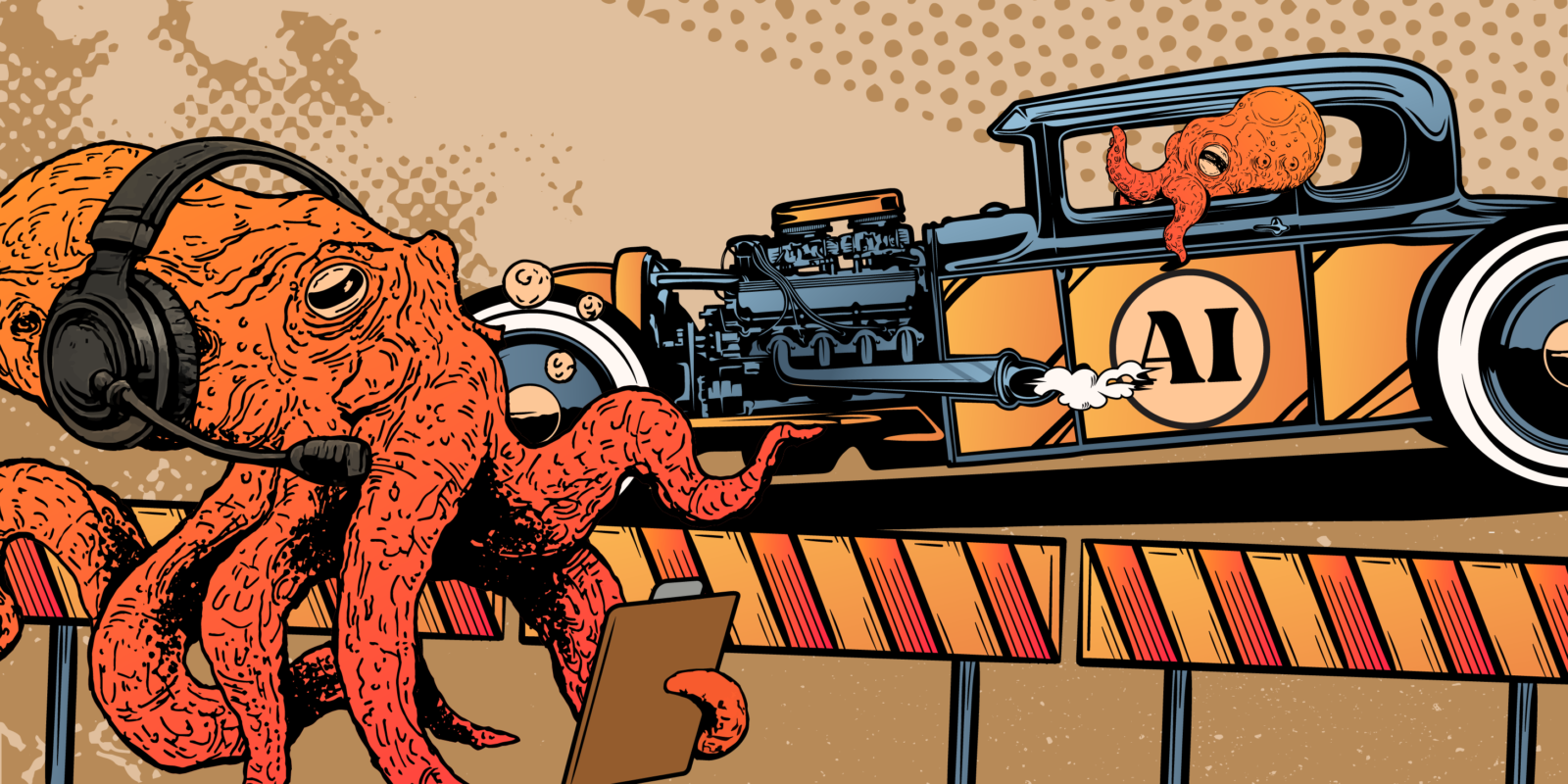

AI might be the hardest-working “intern” your marketing team has ever hired. It can draft blog posts, write ad copy, summarize research, and generate images in seconds, but responsible AI marketing ensures that speed doesn’t come at the cost of accuracy, originality, or brand trust.
But speed also introduces new risks.
The problem is not the technology itself. AI does not ruin brands, but careless use of AI does. Over the past two years, companies across publishing, technology, law, and entertainment have learned this the hard way. When AI-generated content is released without oversight, the consequences can include legal trouble, public backlash, and a loss of trust that takes far longer to rebuild than the content did to create.
That is why responsible AI marketing is quickly becoming an essential discipline for modern marketing teams. The goal is not to avoid AI altogether. Rather, it is to use it carefully and transparently so your brand can move faster without exposing the company to unnecessary legal or reputational risk.
To understand what responsible AI marketing looks like in practice, it helps to look at situations where things went wrong. Several real-world incidents show how quickly AI mistakes can escalate and how a few simple guardrails could have prevented them.
File #1: When Lawyers Trusted AI Too Much
What Happened
In 2023, two lawyers in New York filed a legal brief that included several court cases generated by ChatGPT. The problem was that some of those cases did not actually exist. When the judge reviewed the filing, it became clear that the AI had fabricated the citations, and the attorneys had submitted the brief without verifying them. The court ultimately sanctioned the lawyers and cited the situation as an example of improper AI use.
What Went Wrong
Large language models can occasionally produce what researchers call “hallucinations.” In simple terms, the system generates information that sounds convincing but is not real.
In this case, the lawyers relied on AI-generated material without checking whether the cited cases actually existed. In a courtroom, that kind of mistake is serious. In marketing, it can be just as damaging.
Imagine publishing a blog post that includes statistics that do not exist, research that was never conducted, or quotes attributed to people who never said them. Once readers discover such inaccuracies, trust quickly erodes.
The Responsible AI Marketing Lesson
AI is extremely useful for drafting content, brainstorming ideas, and organizing information. However, any factual claim generated by AI should be verified before it’s published.
That includes checking statistics, industry data, expert quotes, and case studies to make sure the sources are legitimate and accurately represented.
The Guardrail
Adopt a simple source verification rule: if AI produces a statistic, study, or reference, a human should confirm that the source exists and supports the claim before the content goes live.
This one habit prevents a surprising number of AI-related mistakes and helps protect both credibility and brand trust.
File #2: The AI Art Lawsuit That Shook the Creative Industry
What Happened
In 2023, a group of artists filed a lawsuit against AI companies, including Stability AI and Midjourney, arguing that their artwork had been used to train image generation models without permission. The case quickly became one of the most closely watched legal battles in the emerging AI industry.
The artists claim that these models can generate images that closely resemble the styles of specific creators. That possibility raised immediate concerns about copyright protection and whether training data taken from the internet could expose companies to intellectual property disputes.
What Went Wrong
Image generation systems are trained on enormous datasets that can contain millions or even billions of images. If those datasets include copyrighted artwork, the model may learn patterns associated with certain artists and reproduce something visually similar when generating new images.
In other words, an image created by AI might unintentionally resemble an existing piece of art.
For businesses that rely on AI tools to generate marketing visuals, this creates a new question that did not exist a few years ago. Is the image truly original, or could it resemble someone else’s copyrighted work?
The Responsible AI Marketing Lesson
AI image generators are extremely useful for brainstorming concepts and visual directions. They can help teams explore ideas quickly and experiment with styles during the early stages of creative development.
However, those images should not automatically become final marketing assets without a careful review process. Responsible AI marketing treats generated visuals as creative exploration tools rather than finished materials ready for publication.
The Guardrail
One simple way to reduce risk is to create a visual verification checklist before using AI-generated images commercially. A review process might include checking the image for watermark artifacts, running a reverse image search, and confirming that the generator’s terms allow commercial use.
For important campaigns, many companies also recreate AI-generated concepts using traditional design tools or original photography. Taking that extra step ensures the final visuals are clearly owned by the brand and not unintentionally tied to someone else’s creative work.
The goal is simple. Your brand’s visuals should be unmistakably your own.
File #3: The AI Song That Went Viral — and Disappeared
What Happened
In 2023, a song titled “Heart on My Sleeve” spread rapidly across social media and streaming platforms. The track sounded like a collaboration between Drake and The Weeknd, which helped it gain millions of plays in a very short time.
There was just one problem. Neither artist had anything to do with it.
The creator used AI voice models to imitate the artists’ vocal styles and release the song online. As the track gained attention, Universal Music Group stepped in and requested that streaming platforms remove it. The incident quickly sparked debate about how AI can replicate a person’s voice and what legal protections apply when that happens.
What Went Wrong
The AI-generated song closely imitated the voices and style of real artists without their permission. That raised a number of legal and ethical questions involving voice rights, copyright protections, and the potential for unauthorized commercial use.
While this story comes from the music industry, the underlying issue applies just as easily to marketing. Modern AI tools can imitate brand tone, writing style, and even the creative voice of well-known creators.
When content begins to resemble another person’s work too closely, it can create reputational risk. Even if the resemblance is accidental, audiences may question the originality of the content or the integrity of the brand publishing it.
The Responsible AI Marketing Lesson
Responsible AI marketing requires protecting your brand’s voice. Content should reflect your company’s perspective and expertise rather than mimicking another creator’s identity or style.
AI tools help generate drafts and ideas, but the final version of any public-facing content should clearly sound like your organization.
The Guardrail
One practical solution is to adopt a simple voice rewrite rule. Any AI-generated content should be edited before publication, so it reflects the brand’s natural tone and point of view.
In practice, that often means adjusting phrasing, rewriting metaphors, changing sentence structure, and adding original insights that only your team can provide.
AI can generate content quickly, but human editors ensure the final result sounds authentic and unmistakably tied to your brand.
File #4: When Stack Overflow Banned AI Answers
What Happened
In late 2022, the programming community site Stack Overflow temporarily banned answers generated by AI tools. Moderators noticed that many of the responses appeared correct at first glance but contained subtle inaccuracies that made them unreliable.
Because the answers were written in a confident and authoritative tone, the mistakes were not always easy to detect. As a result, moderators found themselves spending more time reviewing and correcting posts that looked credible but contained incorrect information.
What Went Wrong
AI-generated responses can sound convincing even when they contain errors. In technical communities where people rely on accurate information to solve real problems, that creates obvious risks.
A similar issue can appear in marketing content created with the help of AI. Blog posts and articles may include outdated statistics, misinterpreted research, or product claims that are not fully accurate. These problems might not be obvious when the content is first published, but over time, they can damage credibility with readers.
The Responsible AI Marketing Lesson
Responsible AI marketing always includes human oversight. AI tools can dramatically speed up research, drafting, and idea generation, but quality still depends on careful editorial review.
The Guardrail
One simple solution is to establish a human approval rule. Every piece of AI-assisted content should be reviewed by a human editor before it is published.
This review process helps confirm that the information is accurate, the claims are supported, and the tone reflects the brand’s voice. Automation can accelerate marketing workflows, but human judgment is what ultimately protects the brand.
The Pattern Behind Every AI Disaster
When you look across these stories, a clear pattern begins to emerge. Fake legal citations, AI art lawsuits, voice-cloned music, and unreliable technical answers all stem from the same underlying issue.
The problem is not the technology itself. The real problem occurs when AI-generated output is published without review or guardrails.
In each case, people moved quickly and trusted the output without verifying it. That decision allowed small mistakes to slip through, and those mistakes eventually created larger legal, reputational, or credibility problems.
Responsible AI marketing addresses this risk by placing simple systems between AI generation and public publishing. Those systems ensure that content is reviewed, verified, and aligned with the brand before it reaches an audience.
The Responsible AI Marketing Checklist
If your business uses AI in its marketing workflow, a few simple guardrails can dramatically reduce risk. Most organizations adopting AI today eventually develop some version of these review steps.
1. Source Verification
Confirm that any statistics, quotes, studies, or references generated by AI actually exist and support the claim being made.
2. Voice Rewriting
Review AI-generated content and edit it so the tone clearly reflects your brand’s voice and perspective rather than sounding generic or machine-generated.
3. Visual Verification
Before using AI-generated images in marketing materials, review them carefully to confirm they do not contain watermark artifacts, resemble existing copyrighted work, or violate the generator’s commercial use policies.
4. Human Approval
Require editorial review before publishing any AI-assisted content. A human editor should confirm that the information is accurate, the message is clear, and the content aligns with the brand.
5. The “Defend It” Test
Before publishing, ask a simple question: could we confidently explain where this content came from if someone asked? If the source of a claim, statistic, or visual is unclear, it is worth revising or verifying the material before it goes live.
These steps are not complicated, but they create an important layer of protection between AI-generated drafts and public-facing content.
Responsible AI Marketing Is the Future of Marketing
AI is already transforming how businesses create content, run campaigns, and connect with audiences. Marketing teams can generate ideas faster, draft content more efficiently, analyze data at scale, and experiment with creative concepts that would have taken far longer in the past.
But simply using AI will not be an advantage.
The companies that succeed in this new environment will be the ones that use AI responsibly. They combine the speed and efficiency of automation with human judgment, careful verification, and clear creative ownership.
In practice, that means treating AI as a powerful tool within the workflow rather than a replacement for editorial oversight or strategic thinking. AI can help teams move quickly, but people still need to confirm the facts, refine the message, and ensure the final work reflects the brand.
After all, AI can generate content in seconds. Trust, on the other hand, takes years to build. Protecting that trust is ultimately the real purpose of responsible AI marketing.

